

MacLeod&Bíró-DUDW.p383.pdfp11.fig6b Polyukhovych
CLK Fragment CNC Panel F3
7.<tz’u:ni> 9.<tz’u:ni> 7.<9:<tz’u.ni>>

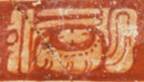

mayavase.com (Kerr) = HLHI Martin
K633 PSS-Q Randel Stela E3
6.<10:tz’u>.ni AJ.<5:tz’u:ni>
· MacLeod&Bíró-DUDW is the paper where this glyph – T501[T544], i.e., a K’IN infixed in the boulder glyph common to HA’, ba, ma, and t’u – is deciphered as tz’u.
· Do not confuse tz’un with the phonetically similar tzuk – tzuk is a much more common (and better understood) word for “part”, “partition”, “province”.
· Both tz’un and tzuk can have numbers preceding them – used to describe regions having that many tz’un or tzuk. This is then further used in titles of rulers (or administrators) of such regions.
· MacLeod&Bíró-DUDW.p387.para1.l-4: We understand tz’un to be a geopolitical concept similar to tzuk in behavior and co-occurrences, but we have also previously suggested an inherent relationship to ch’en.
· Sim:
o The word tz’un seems to always take a number before it: <x> tz’un, so a district was described by its consisting of a certain number of tz’un. That number apparently could range from about 5 to about 15.
o Some districts seem to have had a “double-barrelled” designation: <x> tz’un, <y> tz’un.
o Although the word tz’un appears twice in such names (with a different coefficient each time), it could be either:
§ Written twice, with a different number to the left of each instance (e.g., CLK Fragment), or
§ Written just once, with the first number to the left and the second number above the glyph (CNC Panel F3, K633 PSS-Q, Randel Stela E3)
§ I.e., either: <x>-tz’u-ni <y>-tz’u-ni or <x>-<y>-tz’u-ni. In the latter case, the physical arrangement of the glyphs shows that the single tz’un is to be repeated, once for each coefficient.