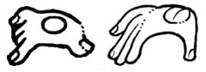
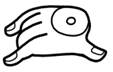

K&L.p26.#4.1&2 TOK.p20.r1.c3 = BMM9.p16.r2.c3 25EMC.pdfp43.#2.1 [25EMC.pdfp43.#2.2 = K&L.p26.#4.2]
NAB / NAHB / NAAB NAHB NAB NAB



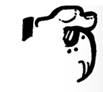
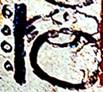
Zender-GFHaS.p5.pdfp5.fig5b = MHD (Kerr)
K635 I’4 K635 I’5 K635 I’6
12.<NAB:ba> 10.<NAB:ba> *9.<NAB:ba>


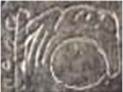
Zender-GFHaS.p5.pdfp5.fig5a = MHD (Kerr) Zender-GFHaS.p1.pdfp1.fig1c = MHD (Kerr)
K1383 E1 K5206
<[ti]12>.<NAB:ba> 9:NAB
· No glyphs given in K&H.
· Features:
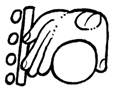
o A right hand with fingers and thumb stretched out.
o The fingers touching and parallel together and maximally distant from the thumb, both pointing downwards (and thereby making an inverted V shape).
o Nominally, a circle representing a ball, “under” the glyph (i.e., inside the inverted V), but often replaced by a ba end phonetic complement.
· Attested (only) with the numbers 9, 10, 12, 13, 14 written in bar-and-dot notation to the left (Zender-GFHaS.p2.pdfp2.para3.l+1).
· Zender-GFHaS (2004):
o This is the paper which first proposed the reading NAHB for this logogram, based on the substitution of na-ba as a pure syllabogram-only spelling (and also ba as a final phonetic complement of the logogram).
o This proposal is convincing and has now been completely accepted.
o Zender-GFHaS prefers the reading nahb.
o Zender-GFHaS.p3.pdfp3 gives the following cognates in the modern Mayan languages (definitions from further referenced works, and given in a mix of Spanish and English or both):
§ Ch’ol: -ñajb – numerical suffix for counting handspans.
§ Tzeltal: -nahb – measure from the thumb to the middle finger.
§ Yucatec: náab – handspan.
§ Mopan: naab – quarter-rod, measure from outstretched thumb to little finger (8-9 inches).
§ Itzaj: naab – quarter-rod, measure from outstretched thumb to little finger (8-9 inches).
· I use NAB partly as a matter of convenience – for the ease of distinguishing it from NAHB = “lake”, “pond”, perhaps also partly influenced by the synharmonic spelling na-ba (and the Lacadena-Wichmann rules). The nahb reading is perhaps based on historical reconstruction.
· EB1.p133.pdfp138.#3 (2009): nab (2) n. hand-span (certain hand-based measurement of game ball).
· K&H.p112.pdfp117.#13 (2009): “handspan” used for counting dimensions – particularly the circumference of rubber balls used in the ballgame.
· The three alternative pronunciations are from K&L.
· Do not confuse NAB with the phonetically similar (in some readings identical) NAHB meaning “lake” or “pond”.
· Do not confuse NAB with the visually similar ke:
o ke has the fingers and palm pointing (roughly) sideways – to the left or to the right.
o NAB has the fingers and palm pointing (roughly) downwards.


Zender-GFHaS.p3.pdfp3.fig3 (Houston) = Zender-GFHaS.p4.pdfp4.fig4
AML Panel 2 A5b
9:na:ba


Zender-GFHaS.p1.pdfp1.fig1a = MHD (Schele) Zender-GFHaS.p1.pdfp1.fig1b = Zender-GFHaS.p2.pdfp2.fig2 = MHD (Graham)
CRN Ballplayer Panel 1 a (tag) YAX HS2 Step 10 D1 (tag)
14.<na:ba> 12.<na:ba>
· These three syllabogram-only spellings were used in Zender-GFHaS to show the substitution of na-ba for the logogram NAB., thereby “deciphering” the reading of the logogram.