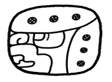
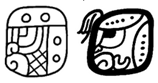

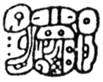
TOK.p18.r1.c3 MHD.SG5.1&2 1718st
JU’? JU’ JU’


MHD (Polyukhovych) MHD (Luin) .
CNC Ballcourt Marker 1 D1 CNC Ballcourt Marker 2 B4 .
*AJ.<*CHAK:*JU’:*TE’> AJ.<CHAK:JU’:TE’> .
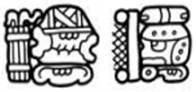
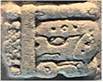
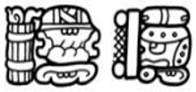
Polyukhovych = MHD (Macri) Polyukhovych = MHD (Macri)
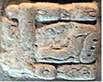
CNC Panel 1 M4-N4 CNC Panel 1 O9-P9
taj{al}.<[CHAN]AHK:na> AJ.<CHAK:JU’:TE’> taj{al}.<[CHAN]AHK:na> AJ.<CHAK:JU’:TE’>
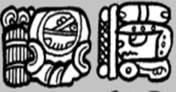
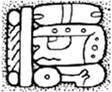
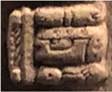
Lakambalam = MHD (Luin) = MHD (Macri)
CNC Panel 3 D4-E4 / ‘C4’-‘D4’ E4 E4
taj{al}.<[CHAN]AHK:na> AJ.<CHAK:JU’:TE’>
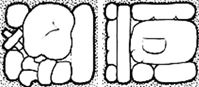
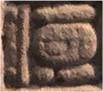
MHD (Luin) = MHD (Macri)
CNC Panel 3 F5-F6 (MHD) / H5-H6 (Barrientos-PhD.p741.pdfp773.fig11.61)
u.<*BAAH:che>.*bu AJ.<*CHAK:*JU’:*TE’>
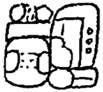
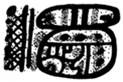
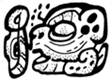
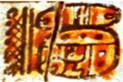
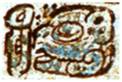
MHD (Graham‚ Lacadena) MHD (Culbert) = MHD (Kerr) MHD (Moholy-Nagy, W. Coe)
ITN Stela 17 K13 TIK MT 176 (“Hummingbird Vase”) G-H TIK MT 180 (Incised Bone) A2
<AJ:CHAK>.<JU’:TE’> AJ.<CHAK:JU’> <TE’.e>
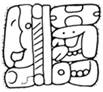
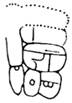
MHD (Graham) MHD (Stuart)
YAX Lintel 10 D3 ZPT Altar 1 glyph- block Z
<MO’:*o>.AJ.<CHAK:JU’:TE’> K’INICH.<*AJ:*CHAK:*JU’:TE’>
· No glyphs given in K&H, K&L, BMM9, 25EMC – i.e., TOK is the only one of the standard references listing this logogram.
· The two ovalish elements (top and right) are very suggestive of one of the (rarer) variants of syllabogram u, but JU’ does not have any cross-hatched areas on the face, present in that variant of u.
· Reading: TOK (2017) has JU? while both MHD and Bonn (dynamically updateable to the present moment, so, presumably, incorporating the latest insights and findings) have JU (without question mark). This would seem to imply that confidence in the JU reading has grown in the course of time.
· MHD statistics (2026-02-26) – a search on “blcodes contains SG5” yields 14 hits:
o Almost all of them (13 of the 14) for the name Aj Chak Ju’ Te’.
o Almost all of these (12 out of 13) even have the whole name in the same glyph-block – only one of them has TE’ in the next glyph-block (TIK MT 176 (“Hummingbird Vase”) G-H).
§ Note that MT stands for “Miscellaneous Text” not “Monument”.
§ The second glyph-block (H) is interesting because it emphasizes the glottal stop at the end of te’ by explicitly writing a syllabogram e.
o Although AJ.<CHAK:JU’:TE’> is the most common arrangement, there are a few other configurations as well.
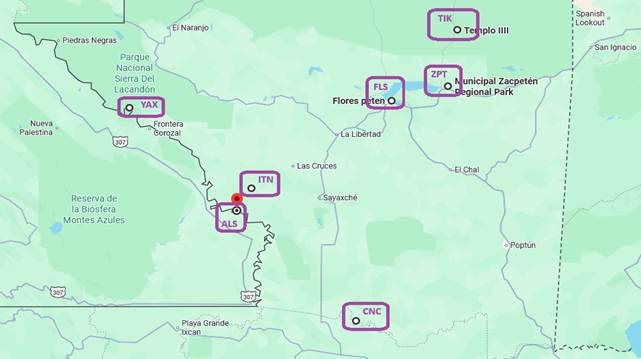
o Though not covering the entire Classic Maya world, there is a reasonable spread of occurrences of this name:
§ ALS - Altar de Sacrificios
§ CNC - Cancuen
§ FLS - Flores
§ ITN - Itzan
§ TIK - Tikal
§ YAX - Yaxchilan
§ ZPT – Zacpeten
These sites form a triangle with YAX in the west, CNC in the south, and TIK in the north-east. Even without knowing any details of when an individual lived or dedicated a monument, which polity they ruled over, etc, this large geographical distribution shows that the same name/title must be found in the extended name/title of different individuals.
· Known (to me) only from occurrences on:
o CNC Panel 1: the name of one of the rulers (Tajal Chan Ahk, Aj Chak Ju’ Te’).
o CNC Panel 3: the carver of the monument was the Baah Che’b (“Head Scribe”) of Aj Chak Ju’ Te’.
o YAX Lintel 10: one of the additional names/titles of the last ruler: K’inich Tatbu Jolom IV: Aj K’an Banak , Ucha’an Ahkul Mo’, Aj Chak Ju’ Te’, Aj K’abal Baak.
o K8008 (“The Hummingbird and Itzam-Kokaaj” vase): the owner of the vase was K’inich Aj Chak Ju’ Te’, a ruler of MTL.
· Meaning: unknown. Chak Ju’ Te’ would appear to be a toponym – the “Great <something> Tree”.