


K&L.p45.r4.c2 = BMM9.p17.r1.c4 TOK.p21.r4.c3 T700
? ? ? -

0700md
-


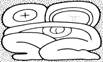

MHD (Graham) = MHD (Looper & Polyukhovych) Graham Graham Graham
NAR Altar 1 B3 YAX Lintel 35 B1 YAX Lintel 37 B1 YAX Lintel 37 B7
“*LTAK”:AJAW “LTAK”:AJAW “LTAK”:AJAW “LTAK”:AJAW


Graham Graham Graham
YAX Lintel 49 B3 YAX Lintel 49 B7 YAX Lintel 49 D4
“LTAK”:AJAW “LTAK”:AJAW “LTAK”:AJAW


Tate Tate Tate Tate
YAX Lintel 11/60 B1 YAX Lintel 11/60 A7 YAX Lintel 11/60 D3 YAX Lintel 11/60 C8
“LTAK”:AJAW “LTAK”:AJAW “LTAK”:AJAW “LTAK”:AJAW

K&L.p45.pdfp45.r4.c3
-


MHD.HLA 0700st
AJAW -
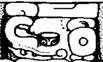


MHD (Schele) MHD (Greene) MHD (Sánchez)
PAL Palace Tablet K7 PAL Tablet of the Slaves B1 PAL Temple 18 Jamb D6
<“LTAK”:ya>.ni <*”LTAK”:ni>.<K’INICH:<[JANAAB]PAKAL> i.“LTAK”.ni


MHD (Sánchez) = MHD (Greene) MHD (Stuart) MHD (Stuart)
PAL Temple 18 Jamb C11 PAL Temple 19 Platform M1 PAL Temple 19 Platform N6
a.<“LTAK”.ni>:ya <“LTAK”:ya>.ni <“LTAK”:ya>.ni


MHD (Schele & Greene) MHD (Schele & Greene) MHD (Schele & Greene)
PAL Del Rio Throne A2 PAL Del Rio Throne E2 PAL Del Rio Throne R1
“LTAK”.ni “LTAK”.ni “LTAK”.ni
· No glyphs given in K&H, 25EMC (listed in K&L.p45.r4.c2, BMM9.p17.r1.c4, TOK.p21.r4.c3 with no pronunciations – in K&L officially under “undeciphered glyphs”).
· This glyph used to have the nickname “HKL” = “Half-Kneeling Legs”. This nickname was based on the “asymmetric” form, which has only one knee on the ground. However, it turns out that there is (at least) one significantly different form, which both MHD and Bonn recognize as being the same glyph: this “symmetric” form has both knees on the ground, making “half-kneeling” no longer accurate. Hence the new nickname of “LTAK”.
· Do not confuse this with the visually similar “headless body sitting on the ground” variant of YAH.
· There exists a drawing by Mathews, of YAX Lintel 11, but this turns out to be the same inscription as the one designated as YAX Lintel 60 in the Tate drawing. As more than two recent papers refer to the fixed set of YAX Lintels 60-49-37-35, I’m going to take YAX Lintel 60 as the more generally accepted number. Note however that MHD designates it at Lintel 11.
· While there isn’t a full consensus on the reading and meaning of this glyph, it has been inferred (from context) that its meaning is connected with rulership (“accession”, “rulership”, “ruler”). The syntax is “LTAK” followed by <name -of-the-ruler>:
o Some epigraphers read it to mean “accession to the rulership”, as what follows is <name -of-the-ruler>, treated as the subject of the verb.
o The difference between “LTAK” and chumwaan/chumlaj ti ajawlel is not clear. It could be a regionalism, or it could be a slight difference in meaning, with the former meaning the very first “coronation” and the latter meaning “sitting in rulership” on any occasion = initially on accession and subsequently during period end rituals.
o One source – “The Maya Glyphorarium” (https://sites.google.com/site/mayaglyphorarium/home) even reads it as CHUM. But I think it should be distinguished from CHUM and not seen as a variant of it:
§ It doesn’t take the verbal complement / prepositional object ti ajawlel, (which chum does, in the context of accessions).
§ It doesn’t have the end phonetic complement mu.
§ It doesn’t take the suffix -waan or -laj.
§ It might be a noun, whereas chum most often functions syntactically as a verb.
· Variants (2):
o A. Asymmetric:
§ Left knee (on the right of the glyph, from the point of view of the reader) on the ground, the knee pointing to the left.
§ Right knee (on the left of the glyph, from the point of view of the reader) above the surface of the ground, the knee pointing to the left.
§ The “ceiling” of the abdomen is bold.
§ Infixed in the abdomen – a relatively simple circular element (compared to the equivalent element in the symmetric variant), at about the position of the navel. There is a huge amount of variation in this element - it can be:
· A crescent with tips pointing upwards (YAX Lintel 49 B3, YAX Lintel 49 B7).
· A washer (YAX Lintel 49 D4, NAR Altar 1 B3?).
· A LEM-like element (YAX Lintel 37 B1).
· A “grip” (YAX Lintel 37 B7).
· Other (YAX Lintel 35 B1, YAX Lintel 60 B1, A7, D3, C8) – some of these might just be eroded forms of one of the above (A7, D3), or genuinely different forms.
o B. Symmetric:
§ Both knees on the ground, both pointing to the centre:
· The knees do not touch in the centre.
· A very small arc runs between the knees, “sealing” off the abdomen / “inside of the glyph” from the outside.
§ The “ceiling” of the abdomen is bold, but the bolded ceiling becomes part of the knees and legs at the bottom of the glyph.
§ Infixed in the abdomen – a relatively complex element at about the position of the navel:
· Top: A semicircle or 3/4-circle hanging from the middle of the ceiling.
· Bottom: a horizontally rectangular, 5-element component, each element touching its immediate neighbour, attached to the bottom of the top element, consisting of (left to right):
o A slightly wavy, L-shaped scroll, pointing left.
o A dot.
o A slightly curved, longish element, pointing down.
o A dot.
o A slightly wavy, L-shaped scroll, pointing right.
· Caution:
o There are three quite slightly eroded instances of this glyph in PAL Del Rio Throne (glyph blocks A2, E2, R1).
o The glyph blocks are slightly eroded, but the main part of each glyph-block has an outline which resembles the day-name cartouche, with “blood scrolls” at the bottom.
o These apparent “blood scrolls” could be mistaken for eroded forms of the knees (the symmetric variant).
o Closer examination and consideration reveal that they are in fact eroded forms of ya and ni, in the configuration: <“LTAK”:ya>.ni (very similar to a number of the other instances at PAL).
o This, in turn, means that the knees of “LTAK” in PAL Del Rio Throne are too eroded to be seen at all.
o The glyphs in question are, nevertheless, considered to be instances of the symmetric variant of “LTAK”, based on the fact that the (reinforced) bold ceiling is symmetric (in A2 and R1, too eroded to see in E2)
· MHD statistics – a search in MHD on “blcodes contains HLA” (2026-06-08) gives 20 hits, found only in NAR, PAL and YAX inscriptions:
o NAR (1 hit):
§ The Graham drawing doesn’t look much like (the asymmetric form of) “LTAK”, due to the lack of detail in the lower part, but the Looper & Polyukhovych photograph does suggest the presence of the left knee touching the ground.
§ The right knee, in both the drawing and the photograph, is much less clear – the visible lines don’t go in quite the right direction.
§ Nevertheless, I think it’s safe enough to classify this as being an instance of the asymmetric variant of “LTAK” (I believe this is what MHD takes it to be).
o YAX (10 hits):
§ Have the asymmetric variant.
§ Never have a ya or ni after it.
§ Found only on one inscription. The inscription is spread over four lintels (YAX Lintels 11/60, 49, 37, 35), but is one continuous narrative, commissioned by one ruler – K’inich Tatbu Jolom II / K’inich Tatbu Jol II. [The first lintel of this series of four has two different numbers in the nomenclature – 11 or 60.]
o PAL (9 hits):
§ Have symmetric legs variant (though a few of the PAL examples are very eroded, and it’s difficult to actually distinguish the legs/knees – see cautionary note above).
§ Always have a ya and ni after it.
§ Found in 5 different inscriptions.
· Sim:
o The falling of “LTAK” into two such distinct groups, with such contrasting characteristics, makes me wonder whether these are two distinct glyphs.
o However, one argument in favour of treating them both as the same glyph and reading it as AJAW is that in the PAL context, they can all be read as AJAW-ni-ya è ajawniiy = “since? he became (the) ruler” while in the YAX context, they can be read as u-<X>-TAL AJAW = “(the) <X>-th ruler”.
o The former Bonn reading of TAL? makes less sense in the YAX context, as it would mean that the word tal occurs twice in succession, preceding the name of each of the 10 YAX rulers named in the inscription. This could be why Bonn have now removed the reading of TAL?. They haven’t, however, gone as far as MHD, and accepted a reading of AJAW. Perhaps they think it’s a separate verb (of unknown pronunciation), meaning perhaps “become” (the ajaw), with an incorporated object ajaw rendered by the reduced form (ben-ich) of AJAW above.