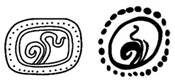

MHD.1G8.2&3 0042bv
-
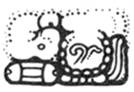

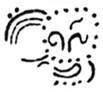
MHD (Houston) MHD (Graham/Lacadena) MHD (Moholy-Nagy / W. Coe)
DPL HS 3 Step 1 D3 ITN (Itzan) Stela 17 I11 TIK MT 028 A7
<cho:ko>.<<<“TPOPG”:la>.ni>:*AJAW?> a{j}.<“TPOPG”:*ni:*la> <2?:?>.<“TPOPG”:*ni>


MHD (Graham/Gronemeyer) MHD (Graham/Gronemeyer)
TRT Monument 6 G12 TRT Monument 6 H17
“TPOPG”:ni “TPOPG”:ni
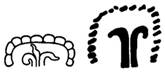

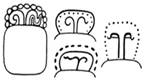
MHD.1G8.1&4 0042bt T42
- - -


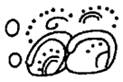
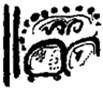
MHD (von Euw / Graham) MHD (Graham) MHD (Graham) MHD (Seler)
COB Stela 1 N10 CRO Altar 3 I NAR Altar 1 A8 PAL House E Mural 1 C1
13.<“TPOPG”:PIK> 10.<“TPOPG”:PIK> 2.<“TPOPG”:PIK> 10.<“TPOPG”:PIK>

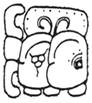


MHD (Schele) MHD (Schele) MHD (Schele) MHD (Schele)
PAL T14 T H1 PAL TI West Tablet C12 PAL TI West Tablet F11 PAL TI West Tablet H7
18.<“TPOPG”:PIK:ya> 1.<“TPOPG”:PIK:?> 18.<“TPOPG”:PIK:?> 1.<“TPOPG”:PIK:<[la]ta>
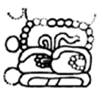

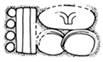

MHD (Schele) MHD (Looper) MHD (W. Coe) MHD (Graham)
CPN Altar U J1 QRG Stela F A16/C16 TIK Stela 10 A9 YAX HS2 Step 7 L2
3.<?:“TPOPG”:PIK:li> <MIH:li>:“TPOPG”:PIK 19.<“TPOPG”:PIK> 13.<“TPOPG”:PIK>
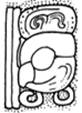


MHD (Prager) MHD (Mathews) MHD (Seler)
'Stone of Chiapa’ pA3 CRN Element 1 B1 PAL House E Mural 1 pA3
10.<“TPOPG”:PIK:*ya> 11.<“TPOPG”:PIK> ?.<“TPOPG”:PIK>
· No glyphs given in K&L, K&H, TOK, BMM9, 25EMC.
o This is not surprising, as this glyph is undeciphered.
o TOK does give a significant number of undeciphered glyphs, but this isn’t one of them.
· Thompson (apparently) knew of and catalogued the reduced variant but not the full variant.
o He assigned it the code T42.
o He would have seen it in the context of the “piktun” calendar unit and (correctly) viewed it as an independent glyph.
· Variants (2) – features:
o A. Full form:
§ Perimeter – a “boulder outline” which can be:
· Touching dots.
· A single line, i.e., non-bold boulder-outline? (theoretically possible, but not seen by me).
· A single line and touching dots.
· A bold boulder-outline? (theoretically possible, but not seen by me).
· A bold boulder-outline with a dotted spine.
§ Inside – two (optionally, occasionally, three) scrolls:
· The scrolls point in opposite directions.
· The scrolls can be “feelers” (just L-shaped) or “flames” (more wavy) or halfway in between, with a tendency to be wavy.
o B. Reduced form – basically the full form without the bottom part of the perimeter, probably because it’s atop another glyph.
· MHD statistics, distribution, and usage:
o A search in MHD on “blcodes contains 1G8” yields 33 hits.
o They can be grouped together as two variants, in semantically quite well-defined and non-overlapping contexts:
§ 0. Indeterminate (2 hits): image not available.
§ 1. Full form (13 hits) – (largely) in the context of “places” – i.e., as part of:
· A personal name.
· An EG – the EG of CRO (El Chorro). (Strictly speaking not a proper EG, but “EG-like”, as it’s not K’uhul “TPOPG”-Ajaw, just “TPOPG”-Ajaw.)
· An AJ-statement as “place of origin”.
· As a plain toponym.
The last two are more or less the same usage (semantically speaking), and even the second one is probably an EG based on the toponym of the main settlement / “capital” of the polity. Two of the 13 hits are tagged as a personal name by the MHD field blsem. Of the 13 hits of the full form:
· Remarkably, only one is without an end phonetic complement, and of the remaining 12:
· 2 are na
· 10 are ni
I.e., the word ends in -n, and ni is a far more common end phonetic complement than na. Two of the examples even have a la in addition to the ni.
§ 2. Reduced form (18 hits) – in the context of the calendar unit “piktun”, always above the PIK logogram, which can be:
· The double KAWAK variant, or
· The bird-head with hand-jaw variant.
The “piktun” can be found in both LC’s and DN’s:
· In both LC’s and DN’s, either the double KAWAK variant or the bird-head variant can occur under the reduced variant of “TPOPG”. Both the double KAWAK and the bird-head variant can even be in the same inscription, e.g., PAL House E Mural 1 pA3 (bird-head) and C1 (double KAWAK).
· The nickname comes from the fact that it’s typically found above the PIK glyph, to write the word “piktun”.
· The nickname applies to both the full and reduced variants, even though the full variant has no obvious connection to the calendar unit.
· It seems never to have an end phonetic complement in this context (which makes sense, as the PIK (and context) would make very clear that the calendar unit is intended.
· See “piktun” for further information.
· The fact that the full variant exists very strongly suggests that “piktun” is not an independent logogram (with a different reading, unrelated to PIK), but is instead a compound word, consisting of “TPOPG” (however that might be read) and PIK. All the more so because it combines so freely with both variants of PIK. The same reasoning can be applied to all the higher calendar units with PIK at the bottom.