[This article is part of the Learner's Maya Glyph Guide.]
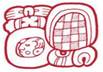
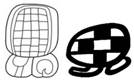
CMGG entry for "CB"

Translation: “chequerboard”, God-GIII of the Palenque Triad’s name (very last part - part 2)
Part of speech: Noun

Logogram spellings of "CB"


TOK.p15.r5.c4                  MC.p118.pdfp119.r3.#1               MHD.ZD4.1&2                              0594st                       T594a&b

?                                          “GI”                                                  ?                                                      -                                  -


Schele                                                    Schele                                               Schele                                    

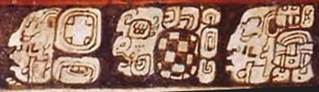
PAL TI  ET B9                                         PAL TI  ET D12                                 PAL TI  ET F10                       

K’INICH.<“MNA”:“CB”:wa>                K’INICH.<*“MNA”:“CB”>              K’INICH.<“MNA”:“CB”>             


Schele                                                   Schele                                               Schele                             

PAL TI CT E7                                         PAL TI CT M5                                  PAL TI WT A6

K’INICH.<“MNA”:“CB”>                     K’INICH.<“MNA”:“CB”>                K’INICH.<“MNA”:“CB”>


Greene                                      

PAL TS O6/F6                           

K’INICH.<“MNA”:“CB”:wa>             


Stuart-TIfTXIX.p80.fig53                                             Stuart-TIfTXIX.p88.fig61                                               Stuart-TIfTXIX.p104.fig75                                    

PAL Temple 19 Platform South Side J4                    PAL Temple 19 Platform South Side P6                     PAL Temple 19 Platform West Side G2             

<K’INICH:MNA>.<“CB”:wa>                                       <K’INICH:MNA>.<“CB”:wa>                                         <K’INICH:MNA>.<“CB”:wa>


WagnerEtAl-TNNT.p2.fig1


Greene

PAL TS D1-D6

K’INICH.<TAJ{al}:WAY[bi]>                           2tz’a.<NAAH:hi> SAK.<BAAK:NAAH>                            K’AHK’ TI’:MIIN

                         <K’IN:ni>.<TAHN:na> K’EW:<we.la>                                CHAPAAT <a:ti>.ni                                                            K’INICH “MNA”.<“CB”:wa>


mayavase.com

K1941 I-J-K

IX.<K’AN:na> AHK?.<wa:“CB”>.yu IX.<MUT:la:AJAW>


·    Features:

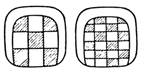
o “CB” (= “Chequerboard”) – there’s considerable variation in the size of the grid, not all of them are even square:

§ A 3 x 3 grid: T594a, PAL TI WT A6, PAL TS O6/F6 and PAL TS D6.

§ A 4 x 4 grid: TOK.p15.r5.c4, PAL TI  ET B9, D12, and F10.

§ A 5 x 5 grid: K1941 I-J-K.

§ A 6 x 6 grid: 0594st.

§ A 3 x 4 grid (PAL Temple 19 Platform South Side)

§ A 4 x 5 grid: MC.p118.pdfp119.r3.#1, PAL TI WT A6 and PAL TI CT E7.

§ Other (many more squares): MHD.ZD4.1, 0594st, and T594b.

o TOK (TOK.p15.r5.c4) and Bonn (0594st) treat only the chequerboard as the glyph whereas MHD (MHD.ZD4) considers the wa-like element at the bottom to be an integral part of the glyph.

·    The pronunciation and meaning of “CB” are unknown.

·    Do not confuse “CB” with some variants of PAKAL. They resemble one another because some variants of PAKAL can also have a “chequerboard”. However:

o Context and the presence of a circle at each of the corners can determine PAKAL, as “CB” never has a circle at each of the corners.

o “CB” has bold walls and ceiling, which PAKAL never has.

o “CB” can (and often does) have a wa-like element at the bottom, never present in PAKAL.

·    God-GIII of the Palenque Triad has a very long, complex name, with many parts. The very last part consists of K’INICH and then two glyphs, both of which have not yet been deciphered.

o Very last part (Part 1):

§ This glyph has been assigned the code MHD.PY2 by MHD and 0239st by Bonn.

§ Neither MHD nor Bonn have given it a reading or a meaning (Bonn doesn’t currently give meanings anyway).

§ I have given it the nickname “MNA” = “Maybe Not Ajaw”.

§ For more information, see “MNA”.

o Very last part (Part 2):

§ This glyph has been assigned the code MHD.ZD4 by MHD and 0594st by Bonn.

§ Neither MHD nor Bonn have given it a reading or a meaning (Bonn doesn’t currently give meanings anyway).

§ I have given it the nickname “CB” (= “Chequerboard”).

§ “CB” often appears with a wa-like element at the end, but this is optional.

·    Order of reading in the deity name:

o The “CB” glyph occurs most frequently as the last part of the name/title of God-GIII of the Palenque Triad. While his full name is very long, it is often shortened to just this glyph (“CB”), with an AJAW-like glyph (“MNA”) above or to the left of it, the two glyphs being preceded by K’INICH.

o The naïve approach would be to read “MNA” as AJAW, and to view the wa-suffix as its end phonetic complement (even though it’s attached to the “CB” rather than the “MNA”).

§ This may not be correct – that is to say: “MNA” might not be AJAW (hence the nickname “MNA” / “Maybe Not Ajaw”).

§ If “MNA” isn’t AJAW, then the wa-like element associated with “CB” might not be a wa. Instead it might be just an integral part of “CB”. [I’ve written a wa In the transliteration under the examples above just out of force of habit. But my gut feeling is that the MHD approach is the right one, and no wa should be transliterated as it’s simply part of the “CB” glyph.]

o The order of reading the two glyphs (“MNA” and “CB”) is then thrown into doubt, in the sense that it’s mainly a reading of AJAW (for “MNA”) which would cause us to read “MNA” after “CB”, despite it being above or on the left of it. If “MNA” isn’t AJAW, then it might well be read before “CB".

·    K1941 J is slightly aberrant:

o It’s one of the few instances of “CB” without an “MNA” to its left:

o The element which resembles wa is at the top instead of the bottom.

o The syllabogram wa normally consists of two circles – one circle with a “bay” on the “far” side of the circle and the other circle with a “bay” on the “close” side of the circle (“far” and “close” being viewed in relation to the main sign). The circle with the “bay” on the “close” side can optionally have two slightly angled struts between the “bay” and the circle (the way yi does). A variant form of the syllabogram wa consists of one circle with a “bay” on the “far” side of the circle and an L-shaped element with the “bay” on the “close” side, i.e., one of the circles (the one with the “bay” on the “close” side) is replaced by an L-shaped element. However, the wa-like element in K1941 J is not like either of these variants of wa. Instead, the circle on the left appears to have its “bay” in the middle of the left wall.

o I think all this is supporting evidence for the idea that the wa-like element it’s not an end phonetic complement of AJAW, but instead an integral part of the “CB” glyph.

THE BULLET POINTS BELOW SHOULD ALL BE MOVED TO AN/THE ENTRY FOR God-GIII as they have less to do with “CB” (or even “MNA”).

·    MC.p118.r3.#2 is given as a non-chequerboard variant of the God-GIII name/title. It has just a “KINICH-head” with a fish’s barbel, and a large square eye. I haven’t included it in the examples above as it doesn’t involve the “CHEQUERBOARD” glyph, and (furthermore) I’m really not sure of its status (whether it’s a slightly different name for God-GIII).

·    God-GIII’s full name (as appears in PAL TS D1-D6) is: K’inich Tajal Wayaab, K’in Tahn K’ewel, Tz’atz’ Naah, Sak Baak Naah Chapaat, Atin K’ahk’ T’i Miin, K’inich “CB” “MNA”; meaning (adapted from WagnerEtAl-TNNT.p7.table2): Glorious Torchy Dreamer/Shrine, Sun-Chest Pelt, Pool House, White Bone House Centipede, Who Bathed in Fire at SNB’s Mouth?, Glorious “<something>” “<something>”. The deviation in interpretation from WagnerEtAl-TNNT involves K’ewel = “Pelt” rather than “Feline” and “SNB” rather than “Sky” (WagnerEtAl-TNNT also doesn’t attempt to give a reading or translation to “CB” and “MNA”).

·    Robicsek&Hales-MHS.p86.para2.l+3 (1974): Altar 5 at Tikal portrays two kneeling figures, both in the guise of God-GIII of the Palenque Triad (otherwise known as Jaguar God of the Underworld, Night Sun, Patron of the Month Uo, and God of Number Seven). [Sim: this is a very old paper, so perhaps insights have progressed a lot more since then – it doesn’t mention the SNB part of his extended name/title and I’m unsure as to God-GIII’s connection to JGU – is it perhaps because of the cruller under the eye of the K’INICH?]

·    WagnerEtAl-TNNT.p5.para2 (2015): In the text from the Temple of the Sun, the term tz’atz’+nah forms part of an epithet of a supernatural related to GIII (Figure 1, Table 2), the local manifestation of the Sun God as a war and fire god and one of Palenque’s patron gods whose mythical birth is recorded in the panel’s inscription (cf. Berlin 1963, Kelley 1965, Lounsbury 1985, Stuart 2005, 2006). [Sim: this paper gives a detailed explanation of the full name of GIII. For the sake of completeness, it covers the more “obvious” (and long-understood) parts of the name; then goes into a bit more detail about atin (because it isn’t really obvious how this word functions in the whole name phrase); finally, it explains the decipherment of C3 as tz’atz’-naah (this is the main point of the paper, and where this decipherment was first given). There is one small aspect of the paper that I find puzzling: it makes an association between God-GIII and the Sun God K’inich. This doesn’t seem to take into account the idea that K’INICH can play two very different roles in a name/title:

o At the start of a name/title it’s an adjective meaning “glorious”, “radiant”, “effulgent” (qualifying what follows).

o At the end of a name/title it’s a reference to the Sun God K’inich (and what precedes it are specific attributes of this particular version of the Sun God).

In God-GIII’s name, the K’INICH appears at the start, and so is not (as far as I can see) a reference to the Sun God.]

·    Shorter forms of God-GIII’s name/title are common, but it’s found in its longest form on PAL TS D1-D6. Parts of the name/title are found in the name/title of a number of rulers.

·    Estrada-Belli&Tokovinine-LSAPiCMP.p208.pdfp14.para3, in reference to SUF (= La Sufricaya): The sides of Stela 6 also depict deities. Since only the upper third of the monument has been found, it is impossible to know if there were two full figures or several floating heads, as on Stela 1. One of the two deities is Sun God with the tajal wayaab ("torch wayaab") epithet in the headdress (see figure 7-7c).

·    Occurrences of K'in Tahn K’ewel (formerly Bolay):

o Tokovinine-TPoP.p185.pdfp196.para.l+4: The other two references to Chak Tok Ich'aak’s grandfather are on Tikal Stela 7:B3 and Stela 3:D2 where the king is called “the grandson of Tsik'in Bahlam” and “the grandson of K'in Tahn Bolay Tsik'in Bahlam sak chuwen” (Tokovinine and Fialko 2007:10-12,Fig.15a-c). Now when we know that there was an early Classic Naranjo ruler named Tsik'in Bahlam, the most plausible explanation of these statements is that Tsik'in Bahlam of Naranjo was Chak Tok Ich'aak’s grandfather. Taking into account what we know about the Tikal dynasty, Tsik'in Bahlam was likely the father of Chak Tok Ich'aak’s mother (Tokovinine and Fialko 2007:12,Fig.16). The timing of such dynastic marriage could not be more appropriate as Tikal was at the peak of its Early Classic political expansion and its influence extended to the north and to the south of Naranjo (Martin and Grube 2000:35; Estrada Belli, et al. 2006).

o Tokovinine&Fialko-St45oN.p11.c2.para-1.l-1-p12.c1.para1.l+3: The text on Stela 7 would then mention the period ending supervised by the “grandson of Tzik’in Bahlam”, whereas the inscription on Stela 3 would refer to Chak Tok Ich’aak II as the “grandson of K’in Tahn Bolay Tzik’in Bahlam Sak Chuwen”.

o Prager-PhD-p1.p242.pdfp256.para1.l-13: Aus den klassischen Texten sind Kompositionen wie etwa der Eigenname der way-Akteure chak tahn waax “rotbäuchiger Fuchs” (Kerr 927, Kerr 1901) (vgl. Grube und Nahm 1994) oder k'in tahn bolay “sonnenbäuchiger Jaguar” (YAX St. 18) bekannt. [English: The names of the way actors such as chak tahn waax “red-bellied fox” (Kerr 927, Kerr 1901) (cf. Grube and Nahm 1994) and k'in tahn bolay “sun-bellied jaguar” (YAX St. 18) are known.]