| CMGG entry for syllabogram mo
|
|
Variant: macaw
TOK.p26.r5.c2
MC = JM ~= K&H TOK.p11.r4.c3
TOK.p11.r3.c2 MHD.BP5.3
MHD (Tolles) MHD (Stuart) MHD (Looper) PNG Panel 3 Q’1 PNG Stela 5 E1 PNG Stela 12 K1 K’AN.<mo:TE’> <K’AN:na>.<mo:TE’> AJ.<mo?:chi:hi>
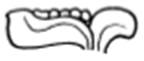
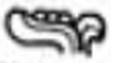
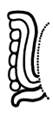
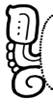
· Subvariants (3): o Full: § The head of a macaw, with. § A circle of touching dots with a central dot, signifying the eye and markings around it. o Reduced: § Just the eye of the macaw. o Snake: § This could be viewed as an embellishment of the reduced variant, with a snake emerging from the centre of the eye. § There are additional slightly curved radial “spokes” from the centre to the outer edge. § MHD views this variant as (only) a logogram MO’ whereas TOK.p11.r3.c2 views it as (only) a syllabogram mo. This is the well-known situation where both interpretations can be equally valid. If there is such a snake glyph, then there may or may not be a syllabogram o following it, when writing the word mo’ = “macaw”: · With o following: o MO’-o: a logogram spelling of mo’, with a redundant end phonetic complement. o mo-o: a syllabogram-only spelling of mo’. · Without o following: o MO’: a logogram spelling of mo’, without end phonetic complement. o mo: a syllabogram-only spelling of mo’ with underspelled final consonant (=glottal stop). It’s only if we see the snake glyph before or after other syllabograms, writing words which have nothing to do with mo’ = macaw, that we know that it’s functioning as a syllabogram. Similarly, if we see the snake glyph before or after a logogram starting with m- or ending in -m and having nothing to do with mo’ = macaw, then we also know that it’s functioning as a syllabogram, this time as an initial or final phonetic complement. Outside of these situations (i.e. in connection with writing mo’ = “macaw”, it’s equally valid to view the glyph as a logogram or syllabogram). In theory, a similar doubt could arise for the full (bird-head) form and the reduced (eye only) form. But these occur in so many non-macaw contexts that there’s no doubt that they behave as syllabograms.
|