| CMGG entry for syllabogram ma
|
|
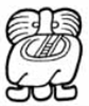
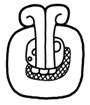
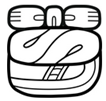
Variant: extended boulder
MC K&H JM TOK.p34.r1.c3 0074tv 0074bl
MHD.ZM1.1 0074ta
0074tf
MC K&H JM TOK.p10.r2.c1
MHD.ZM1.2&5 0074tt 0074dt
TOK.p10.r3.c4 MHD.ZM1.4
MC = K&H JM TOK.p10.r3.c1 MHD.ZM1.3&8 0074tb
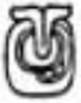
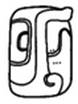
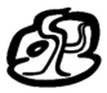
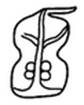
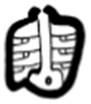
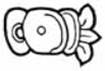
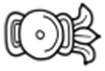
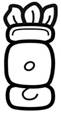
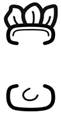
· Features – at the highest (and most complete) level, a tripartite glyph with 3 stacked components: o Top – a tripartite element, nicknamed “butterfly” / “bowtie” (the nicknames are obviously not related to the iconographic origin of this element): § Centre: · A small rounded-rectangle or circle with an indentation in the middle of the bottom. · The indentation is often a slightly curved, inverted-V, but can be so narrow that it appears to be just a vertical tick. § Sides – the central element is flanked by two “wings” (mirror images of one another): · Longish, rounded rectangles with a series of 3-5 horizontal ticks on the inside of the “outer” end. · A small (half-)dot at half height, on the inside of the “inner” end. o Middle – a “boulder”: § There’s a rounding/ovalish element occupying the entire top half. § Within that element, there can be either: · An arc, forming (together with the ovalish element), a LEM, or · A “ladder”, often with slightly curved sides. o Bottom – (what appear to me to be) three “legs”, which can be: § The full legs of a “tripod”: · The left leg like a mirror imaged L (reflected along the vertical axis), with the leg pointing to the left. · The right leg like a conventional L, with the leg pointing to the right. · The “middle” leg, with the leg pointing away from the viewer (and hence appearing as just a circle or square with rounded corners). With the “tripod” form, each leg can optionally have a bit of reinforcement (TOK.p34.r1.c3). § The “reduced legs” of a “tripod” - just circles/dots – three equally sized circles (or squares with rounded corners), either: · Touching (JM), or · Non-touching (0074tv). Perhaps the 3-dot form is a simplification of the “tripod”. · Subvariants (5) – the various combinations of the three stacked parts: o A. Full tripartite form, as given in “Features” above (MC, K&H, JM, TOK.p34.r1.c3, 0074tv, 0074bl). o B. Top two components (MHD.ZM1.1, 0074ta): § “butterfly” / “bowtie”, and § “boulder”. This is superficially similar to but actually (very) different from the “ajaw-face in boulder” variant (see below). o C. Top and bottom components (0074tf): § “butterfly” / “bowtie”, and § “tripod” legs. This is where a main sign covers up the “boulder” part of a full ma, leaving the “butterfly” / “bowtie” to stick out of the top and the “tripod” legs to stick out the bottom. o D. Top component only – “butterfly” / “bowtie” alone (MC, K&H, JM, TOK.p10.r2.c1, MHD.ZM1.2&5, 0074tt): § This “glyph” (/element) is found as the “outermost” element of the abstract variant of K’INICH. This is the reason that an early reading of K’INICH was ma k’ina (ultimately rejected). § Bonn has a form with only the left and middle component (0074dt). Conceivably, the mirror image of this, with just the middle and right component is also possible. o E. Bottom component only: § Full “tripod” legs (TOK.p10.r3.c4, MHD.ZM1.4), or § “Tripod” legs reduced to circles/dots (MC=K&H , JM, TOK.p10.r3.c1, MHD.ZM1.3&8, 0074tb). Either alternative is possible in any subvariant which has this bottom component.
|
|
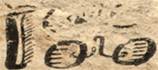
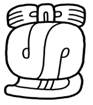
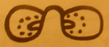
Variant: spectacles
JM.p165.#2 T74d T74e MHD.ZM1.6 MHD.ZM1.7
MHD (Grube) CRC Ballcourt Marker 3 F3 <K’UH{ul}:K’AN:tu>.<ma[ki]>
AT-E1168-lecture10.t0:27:04 = MHD (Förstemann) Dresden Codex 28a01 <ka/u>.<ma:ma>
· The nickname “spectacles” is obviously not related to the iconographic origin of this sign. · Features: o Two rounded squares, each with a series of 3-5 horizontal ticks on the inside of the “outer” end. o The two squares are joined to one another by a single slightly curved line between them (the so-called “bridge” in the frames of spectacles, which goes on the bridge of the nose when the spectacles are worn). · This clearly could be considered a (sub)subvariant of “butterfly” / “bowtie”. I separate it out from the others because it looks so dramatically different to me that for a long time I didn’t see the connection. The decision to do so is quite arbitrary and a matter of taste, rather than being a significant and “factual” distinction. · CRC Ballcourt Marker 3 F3: o In MHD, this inscription has “objabbr = CRCBCM03”. o The ticks are missing in one of the flanking elements because the ki is infixed in it, hence obscuring the ticks. · BPK Sculptured Stone 5 F9: o Safronov made two different drawings of this inscription. o There are also two photographs in Coll-1, both unfortunately unattributed. o In MHD this is “objabbr = BPKSS05”. From one of the drawings, the middle element of F9a looks like the “spectacles” variant of ma. However, it’s coded as XV4 = sa in MHD. Examination of a photograph reveals that it’s more like a sa than a ma (personal communication, Matthew Looper 2023-01-28). Indeed, the bolding of the outer wall (visible in both photographs and in one of the Safronov drawings) points more to sa (i.e., the “left comb”) than ma.
Safronov = Safronov = Coll-1 = Coll-1 BPK Sculptured Stone 5 F9
<ta:<
This inscription is hence not an example of “spectacles” variant of ma. It’s only included here for the sake of completeness (e.g., to warn against reading it as the “spectacles” variant of ma).
|
|
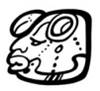
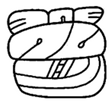
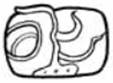
Variant: ajaw-face in boulder
MC K&H JM TOK.p14.r3.c1 MHD.XE4.2&3 0502st
MHD.XE4.1 0502hh
0502hp
· Features – this variant is a boulder outline with two infixed elements (a “dot necklace” and “blades of grass”) in common with a number of other glyphs. The list below shows the unique element infixed in the top which distinguishes them from one another: o ba: LEM-like element. o ma: right-side-up AJAW-face. o t’u: KAWAK. o tz’e: a slightly curved, bold V with “dot protector” underneath (the “dot protector” replaces the “necklace”, and the bold V can sometimes be non-bold). o tz’u: K’IN. o HA’: cross hatched circle. o “IMIX”: cross hatched circle or LEM-like element (usually distinguished from HA’ by the blood cartouche). · At first glance, one might be tempted to think of this as just another subvariant of the “extended boulder” variant (see above), where only the boulder part of the extended boulder is left (that’s the only subvariant not listed among the subvariants of the “extended boulder” variant). This is however missing some very important subtleties: o In all the subvariants of the “extended boulder” variant, one or two of the three top-level tripartite (stacked) elements are omitted, and then what’s left is, perhaps, slightly modified (but rarely). o In contrast, here, in the “AJAW-face in boulder” variant, the “dot necklace” and “blades of grass” are present, which never appear in any of the subvariants of the “extended boulder” variant. o In that sense, this “AJAW-face in boulder” variant is much more closely related – in graphic/visual terms in any case – to the variants of ba, t’u, tz’e, tz’u, HA, “IMIX”, which all have these two components as well. o That’s the reason that I’ve split it off the “AJAW-face in boulder” as a separate variant of ma. o Both MHD and Bonn distinguish the two: § The “extended boulder” variant and its subvariants are: ZM1 (MHD) / 0074xx (Bonn). § The “AJAW-face in boulder” variant and its subvariants are: XE4 (MHD) / 0502xx (Bonn). o Historically, this distinction might have been a very real one. We know of the mu/bu distinction that Maya inherited its system of glyphs from a language which didn’t distinguish between /m/ and /b/. So, initially, both mu and bu were written with the same glyph. It was only later that two or three cross hatched circles were added to the “feeler”, to distinguish mu from bu. It seems that a very similar process could have occurred with (these particular variants of) ma and ba, resulting in the addition of the AJAW-face to a basic ba glyph, hence resulting in the presence of the “dot necklace” and “blades of grass”. · Subvariants (3): o A. An AJAW-face infixed in the top of the boulder (full form): as described in “Features” above. o B. Head: the “animated” subvariant – simply a generic anthropomorphic head with the characteristics of the full form (“dot necklace”, “blades of grass”, and “ajaw-face”) infixed. o C. Skull – Bonn recognizes a subvariant (0502hp): § A skull with the full form infixed in the top of the skull (or rather, above and overlapping, rather than completely infixed). · Overall MHD statistics (2025-08-27) – seen from a search in MHD on “blcodes contains <XXX>”, where <XXX> is: o ZM1 (all the forms, from “extended boulder” (= “boulder” with “bowtie” on top and “three legs” underneath, to 3 or 4 successively reduced forms, down to “bowtie only” and “three legs only” / “3-circle” form (and even including the “spectacles” form)): 1,753 hits. o XE4 (“AJAW-face in boulder” variant): 147 hits. The “AJAW-face in boulder” occurs less than 1/10 as often as the other forms. This is unsurprising, considering how many more forms there are of the “extended boulder” variant (including some extremely reduced subvariants, like the “butterfly” / “bowtie” and the 3-circle subvariants. Unfortunately, the single assigned code of ZM1 for all these forms doesn’t enable us to easily gather statistics at a finer level of granularity. With 1,700+ hits, visual inspection is difficult and so hasn’t been done so far.
|