| CMGG entry for syllabogram lu
|
|
Variant: snail
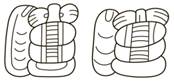
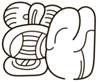
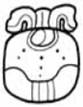
MC K&H = K&L TOK.p21.r1.c1 BMM9.c1.r5 25EMC.pdfp23.#5.3
MHD.ZR2.4&5 JM T568b 25EMC.pdfp23.#5.1
MHD.ZR2.1&2 0568st T568a
25EMC.pdfp23.#5.2 T568c
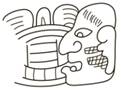
MHD.ZR2.3 0568hh
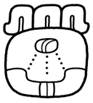
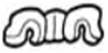
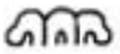
· Features – a (basically) boulder-outline glyph: o It can be quite squarish with rounded corners, as so often with Maya glyphs (e.g., TOK.p21.r1.c1), but has a tendency to be slightly diagonally oriented, in the NE-SW direction (e.g., MC, K&H, JM). The “diagonal” ones have a tendency to have an additional slight narrowing at the SW end, creating the impression of a distinct “tip” (e.g., MC, K&H). Note, however, that T568b has, exceptionally, a NW-SE orientation. o Inside, at the SW end (bottom left corner), within the glyph, a ka-comb, teeth pointing NE. § With a less of a diagonal outline, the ka-comb can also be less diagonally oriented, instead pointing straight up (MHD.ZR2.1). § There are a few instances where the “teeth” of the ka-comb are replaced by cross hatching. o At the NE end (top right corner), on the outline of the glyph, a circular element with, in turn, at its NE end / top right corner, a further, smaller circular element: § There’s some correlation between how long/elongated it is and to what extent the element “sticks out” of the main body of the glyph. The more elongated it is, the more it sticks out, the elongation also contributing to the diagonal NE-SW alignment of the entire glyph. This degree of elongation of the circular element also correlates with the degree of elongation of the smaller circular element at its end in the same way. The extremely elongated smallest circular element even has a slight curve to it (MC, K&H). o Even with no diagonally oriented outline, the whole glyph gives a diagonal impression, caused purely by the ka-comb in the SW / bottom left corner and the circular element in the NE / top right corner. o A number of examples (MHD.ZR2.4&5, JM, T568b, 25EMC.pdfp23.#5.1) have a (rotated) “face” in the circular element at the top right corner, also diagonally oriented (top left in the case of T568b because it has a NW-SE orientation). o A number of the example have a bold outline, all around the outside of the glyph (MHD.ZR2.4, T568b, T568c, 25EMC.pdfp23.#5.2). However, as 2 of the 4 have a “face” and the other 2 don’t have a “face”, they don’t really form a coherent sub-group. Furthermore, bolding is often just a “decorative” parameter anyway, the presence or absence of bolding isn’t an aspect of the glyphs which distinguish glyphs for one another – all the more reason not to consider this a distinctive element. o Interestingly, MHD.ZR2.1 and T568a both have an additional element: a medium-sized dot in the upper left corner of the glyph, not touching any of the other elements. · Both MHD and Bonn recognize a head variant (ZR2.3 and 0568hh): o It appears to be the animated form of the standard variant – just the elements of the standard variant, placed in a “generic head”. o The MHD example has lost the ka-comb, perhaps because it’s too near the lips and chin on the left. o The MHD example is unfortunately only an example, not an independent code (see below for why this is unfortunate). · Overall MHD statistics (2025-07-23): o A search in MHD on “blcodes contains ZR2” yields 532 hits. o These include the head variants, as the MHD code doesn’t allow us to make a distinction. o Unfortunately, 532 is too large a number to walk through and determine by visual inspection roughly how many are head glyphs. o The lack of a distinction by adding a suffix also means that it’s not possible to know how many occurrences there are of the “face” subvariant vs. the “non-face” one (and whether the face variant is regionally restricted, or was particular common at some short period in time). It’s possible to gather such statistics by visual inspection, but given the large number, it would be very labour intensive and quite error prone. Having unique codes would mean that the process would not be at all manually intensive, just shown by the hit count of various queries, the way statistics are reported here in the CMGG for a number of other glyph variants.
|